
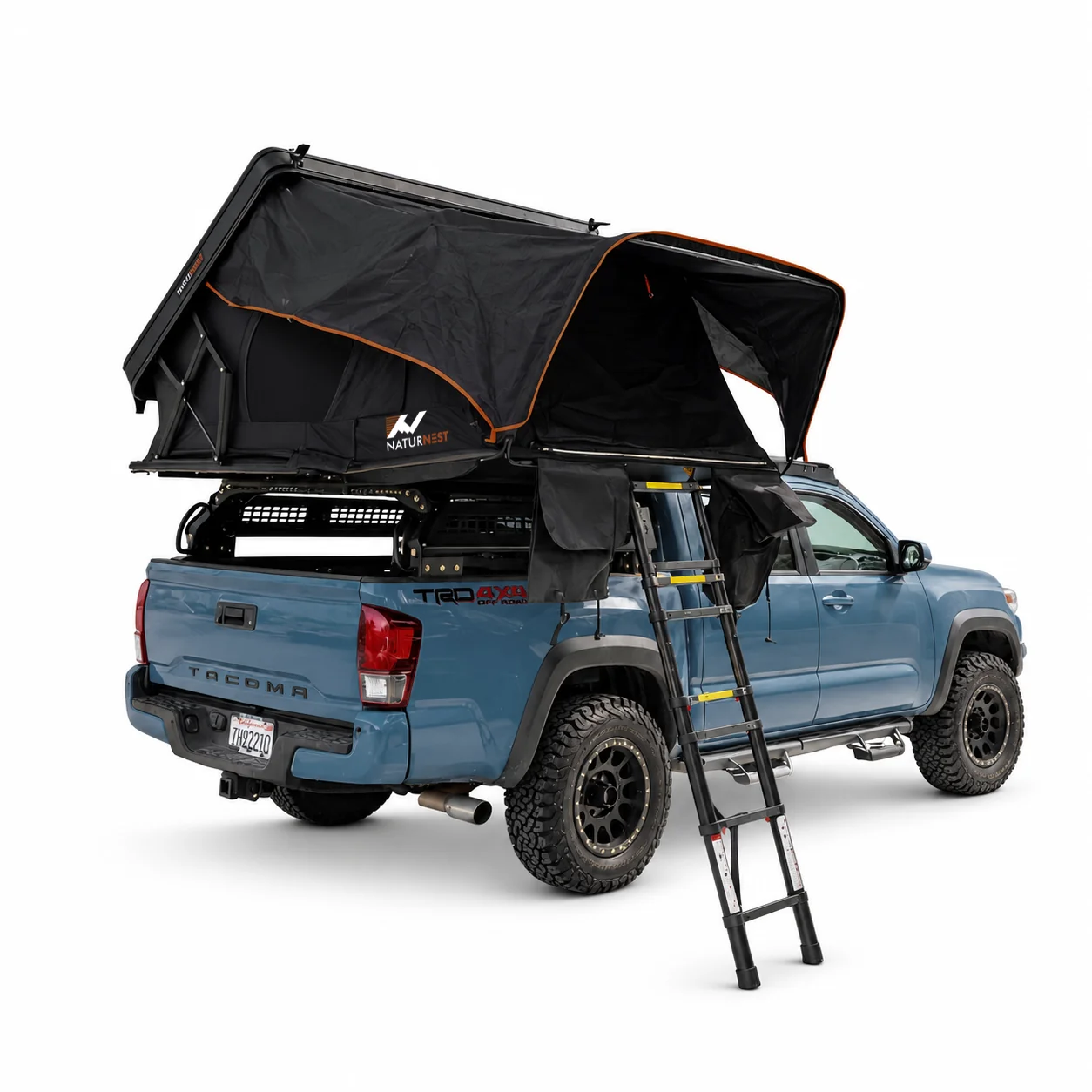
Condensation is now one of the most common questions from rooftop tent buyers. Modern hard-shell tents seal better than older canvas shelters, which is good for rain and wind, but it also means moisture from breathing, wet jackets and cold metal roof panels needs a clear escape path. This 2026 guide explains how to keep a rooftop tent drier and warmer in winter without overcomplicating your camp routine.
Why condensation happens in a rooftop tent
Every sleeper releases moisture overnight. When warm interior air touches a cold shell, window panel or mattress base, that moisture turns into droplets. The problem is usually not a leaking tent; it is trapped humidity. Winter camping, coastal fog, wet boots and closed windows all increase the risk.
1. Keep two small vents open, even in cold weather
The biggest mistake is closing every window to stay warm. Leave two opposite vents cracked open so humid air can move out and dry air can enter. On a hard-shell model such as the Sirius 2 XL Aluminum, use the side windows under the rainfly rather than the wind-facing door.
2. Lift the mattress off the cold base
A condensation mat or 3D airflow layer under the mattress creates a small air gap. That gap prevents moisture from being trapped between the mattress and the base board. If you camp in snow, rain or maritime climates, this is one of the highest-value upgrades.
3. Separate wet gear from sleeping gear
Wet jackets, boots and towels add more moisture than people realize. Keep them in an annex, vehicle footwell or dry bag instead of inside the sleeping cabin. If you use an annex such as the Sirius 2 XL Annex Room, treat it as the wet zone and keep the tent body as the dry zone.
4. Use insulation without blocking airflow
Thermal liners help retain heat, but they should not press tightly against every vent. Leave small air channels open at the top and sides. For cold trips, pair a liner with breathable bedding rather than wrapping the entire interior in non-breathable plastic or emergency blankets.
5. Pack dry whenever possible
If you must close the tent wet, reopen it within 24 hours to dry the fabric, mattress edges and shell corners. Long-term wet storage creates mildew and zipper corrosion. At home, open the tent in the sun or in a ventilated garage before storing it.
Quick winter checklist
- Open two protected vents before sleeping.
- Keep wet clothes and boots outside the sleeping cabin.
- Use a mattress airflow pad in cold or humid regions.
- Wipe shell corners in the morning before closing.
- Dry the tent fully after every wet trip.
Bottom line
A rooftop tent stays comfortable in winter when it can breathe. The best setup is not a completely sealed shell; it is a controlled airflow system with protected vents, a dry mattress base and a separate wet-gear area. Start with ventilation, then add an insulation layer only if your trips regularly fall below freezing.